Buy
Chữa đề thi thật IELTS Writing task 1 Process of making cheese
Loading...

Chữa đề thi thật IELTS Writing task 1 Process of making cheese

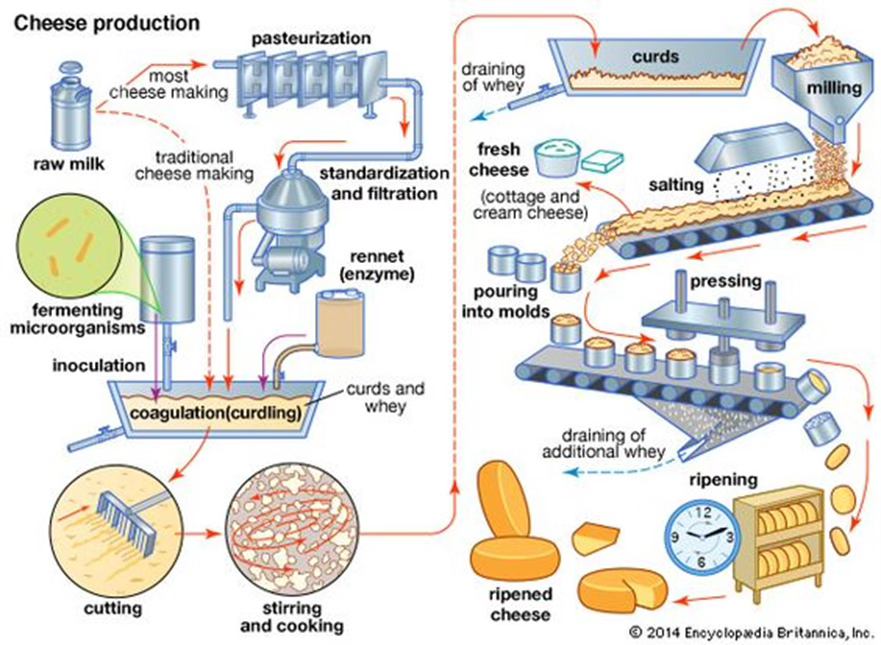
Chữa đề thi thật IELTS Writing task 1 trên máy ngày 18/4/2025: The diagram below shows the process of making cheese. Summarise the information by selecting and reporting the main features and make comparisons where relevant.
Mở/Đóng

    Đây là một đề bài IELTS Writing task 1 khó - quy trình sản xuất phô mai và nằm trong kho đề thi IELTS trên máy. Hãy cùng SOL chữa đề bài này để có thêm sự chuẩn bị thật kĩ trước kì thi IELTS sắp tới nhé.

    1. Đề bài IELTS Writing task 1

    The diagram below shows the process of making cheese. Summarise the information by selecting and reporting the main features and make comparisons where relevant.


    2. Chữa đề thi thật IELTS process of making cheese

    Phân tích đề bài

    Đề bài yêu cầu chúng ta mô tả quy trình sản xuất phô mai (cheese) dựa trên sơ đồ được cung cấp. Đây là dạng bài IELTS Writing Task 1 dạng process, thường yêu cầu người viết mô tả các bước trong một quy trình theo thứ tự logic, không cần đưa ý kiến cá nhân hay so sánh số liệu. Sơ đồ cho thấy quy trình sản xuất phô mai bắt đầu từ sữa tươi (raw milk) và kết thúc với hai sản phẩm: phô mai tươi (fresh cheese) và phô mai ủ (ripened cheese).

    Các đặc điểm chính:

    • Quy trình bắt đầu với sữa tươi (raw milk), sau đó trải qua các bước như thanh trùng (pasteurization), chuẩn hóa (standardization), và lọc (filtration).
    • Vi sinh vật lên men (fermenting microorganisms) và enzyme rennet được thêm vào để làm đông sữa thành váng sữa (curds) và nước sữa (whey).
    • Váng sữa được xử lý qua các bước cắt (cutting), khuấy (stirring), và nấu (cooking), sau đó tách bỏ nước sữa.
    • Một phần váng sữa được dùng để làm phô mai tươi (như cottage cheese hoặc cream cheese), không cần qua các bước tiếp theo.
    • Phần váng sữa còn lại được xay (milling), muối (salting), ép (pressing), và ủ (ripening) để tạo ra phô mai ủ.

    So sánh:

    • Phô mai tươi được sản xuất sớm hơn, chỉ cần một vài bước đơn giản, trong khi phô mai ủ cần thêm nhiều công đoạn phức tạp hơn như ép và ủ lâu dài.

    Lập dàn ý 

    1. Introduction (Mở bài):
      • Viết lại đề bài bằng cách paraphrase: Mô tả sơ đồ về quy trình sản xuất phô mai.
      • Nêu rõ quy trình này tạo ra hai loại phô mai: phô mai tươi và phô mai ủ.
    2. Overview (Tổng quan):
      • Đề cập số lượng giai đoạn chính (khoảng 10 bước).
      • Nhấn mạnh hai sản phẩm cuối: phô mai tươi (fresh cheese) và phô mai ủ (ripened cheese).
      • Nêu đặc điểm chính: quy trình có một nhánh để tạo phô mai tươi, còn lại tiếp tục để làm phô mai ủ.
    3. Body Paragraph 1 (Thân bài 1):
      • Mô tả các bước đầu tiên: từ sữa tươi, thanh trùng, chuẩn hóa, thêm vi sinh vật và enzyme, làm đông sữa, cắt, khuấy và tách nước sữa.
      • Tập trung vào các giai đoạn chuẩn bị ban đầu.
    4. Body Paragraph 2 (Thân bài 2):
      • Mô tả nhánh sản xuất phô mai tươi (fresh cheese) và các bước tiếp theo để làm phô mai ủ: xay, muối, đổ vào khuôn, ép, và ủ.
      • So sánh ngắn gọn giữa hai loại phô mai về số lượng công đoạn.

    Bài mẫu 1: Band 6.5-7.0

    The diagram illustrates the process of producing cheese from raw milk. This process includes several stages and results in two types of cheese: fresh cheese and ripened cheese.

    Overall, the cheese production process consists of around ten steps, beginning with raw milk and leading to the creation of fresh cheese, such as cottage cheese, and ripened cheese, which requires additional stages.

    In the first stage, raw milk is pasteurized to remove harmful bacteria. Then, it is standardized and filtered to ensure its quality. After that, fermenting microorganisms and an enzyme called rennet are added to the milk, causing it to coagulate into curds and whey. The curds are then cut, stirred, and cooked to separate the whey, which is drained away.

    At this point, some curds are used to make fresh cheese, like cottage or cream cheese. The remaining curds are milled and salted before being poured into molds and pressed to remove more whey. Finally, the cheese is ripened for a certain period to develop its flavor, resulting in ripened cheese.

    (Words: 172)

    Từ vựng hữu ích:

    • Pasteurized: Thanh trùng (loại bỏ vi khuẩn có hại).
    • Standardized: Chuẩn hóa (đảm bảo chất lượng đồng đều).
    • Coagulate: Làm đông (biến sữa thành váng sữa và nước sữa).
    • Milled: Xay (nghiền nhỏ váng sữa).
    • Ripened: Ủ (làm chín phô mai để phát triển hương vị).

    Bài mẫu 2: Band 8.0

    The diagram delineates the process of cheese production, starting from raw milk and culminating in two distinct products: fresh cheese and ripened cheese.

    Overall, the cheese-making procedure encompasses approximately ten sequential stages, with a divergence where some curds are transformed into fresh cheese, such as cottage or cream cheese, while the remainder undergo further processing to produce ripened cheese.

    Initially, raw milk is subjected to pasteurization to eliminate pathogens, followed by standardization and filtration to ensure uniformity and purity. Subsequently, fermenting microorganisms and rennet, an enzyme, are introduced, triggering the coagulation of milk into curds and whey. The curds are then cut, stirred, and cooked to facilitate the separation of whey, which is subsequently drained off.

    At this juncture, a portion of the curds is set aside to create fresh cheese, requiring minimal further processing. Conversely, the remaining curds are milled, salted, and poured into molds before being pressed to expel residual whey. The final stage involves ripening the cheese over an extended period, enhancing its flavor and texture, resulting in ripened cheese ready for consumption.

    (Words: 176)

    Từ vựng hữu ích:

    • Delineates: Mô tả rõ ràng (dùng để thay thế "shows").
    • Culminating: Kết thúc (chỉ giai đoạn cuối của quy trình).
    • Subjected to: Được xử lý (thanh trùng hoặc các bước khác).
    • Triggering: Kích hoạt (gây ra quá trình làm đông sữa).
    • Expel: Loại bỏ (tách nước sữa còn lại).
    • Residual: Còn sót lại (nước sữa dư thừa).
    • Enhancing: Cải thiện (làm tăng hương vị và kết cấu).

    Hy vọng bài viết có ích cho các bạn trong quá trình luyện thi IELTS. 

    Tags:
     
    Share:
    Bình luận:

    Bài viết liên quan

    Không có thông tin cho loại dữ liệu này

    Danh mục Tin tức

    Loading...

    Chương Trình Đào Tạo

    Loading...

    Bài Viết Mới

    Loading...

    Fanpage

    Giam le phi thi 200K
    Luyen thi IELTS si so nho chat luong cao
    Bứt tốc IELTS cùng SOL
    Banner tin tức dọc 3
    Banner tin tức 2
    Buy
    Loading...