Scientists agree that many people eat too much junk food and it is damaging their health. Some people think that this problem can be solved by education, while others believe that this education will not work. Discuss both views and give your opinion.
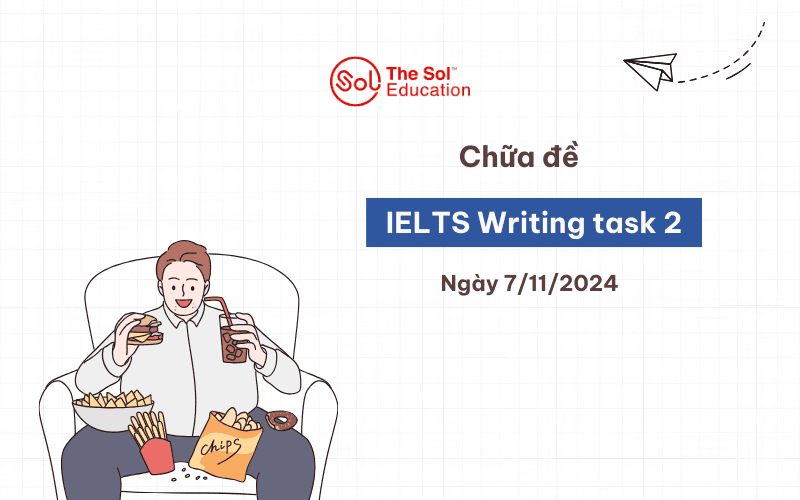
Đây là đề bài thuộc dạng disuss bọt views nên các bạn cần phải làm rõ ý ở cả 2 quan điểm, sau đó đưa ra quan điểm của bản thân.
Dưới đây là một khung bài viết mà SOL gợi ý để các bạn có thể giải quyết đề bài IELTS Writing task 2 này:
Mở bài (Introduction)
Thân bài 1 (Body Paragraph 1) - Quan điểm 1: Giáo dục có thể giải quyết vấn đề
Thân bài 2 (Body Paragraph 2) - Quan điểm 2: Giáo dục không hiệu quả
Thân bài 3 (Body Paragraph 3) - Ý kiến cá nhân
Kết bài (Conclusion)
Dưới đây, SOL mang đến cho các bạn 2 bài mẫu IELTS band 8.0 để tham khảo ý tưởng và cách triển khai bài viết nhé:
The increasing consumption of junk food has raised concerns about public health, prompting debates on whether educational efforts can effectively address this issue. Some argue that educating the public about the dangers of junk food could lead to healthier eating habits, while others believe that educational efforts alone are insufficient to overcome the strong appeal and accessibility of these foods. In this essay, both views will be discussed, followed by my perspective that education should be part of a larger, more comprehensive strategy.
Proponents of education argue that informative campaigns can significantly alter people's eating habits. They believe that raising awareness of the health risks associated with excessive junk food consumption, such as obesity, heart disease, and diabetes, can encourage individuals to make healthier choices. For example, health education programs in schools have successfully reduced sugary drink intake and increased students’ awareness of a balanced diet. Furthermore, government-led campaigns, like those promoting the benefits of fruit and vegetable consumption, have shown positive outcomes in shifting public perception towards healthier eating. These examples suggest that education has the potential to influence behavior, particularly when targeted at younger generations who are still forming their dietary preferences.
On the other hand, skeptics believe that education alone is insufficient due to deeply entrenched dietary habits and the appeal of junk food. Junk food is not only widely available and affordable but also engineered to be highly palatable and even addictive for some people, making it difficult for education to compete. Moreover, cultural and lifestyle factors often reinforce unhealthy eating patterns; for instance, fast food is frequently seen as a convenient choice for busy individuals or families with limited budgets. Advertising tactics employed by fast-food companies further exacerbate the issue, creating a powerful influence that educational messages struggle to counterbalance. Therefore, critics argue that while education is beneficial, it is unlikely to bring about significant change in isolation.
In my opinion, while education plays a crucial role, it must be complemented by supportive policies and industry accountability to be truly effective. Governments should implement measures such as imposing higher taxes on junk foods, restricting junk food advertising, especially to children, and promoting subsidies for healthier food options. Moreover, food manufacturers have a responsibility to produce and market healthier options. By combining education with policy changes and corporate responsibility, a more supportive environment for healthy eating can be created. This multifaceted approach would address both the demand for and the supply of junk food, leading to more sustainable improvements in public health.
In conclusion, addressing the junk food crisis requires a multifaceted approach that includes education as well as broader societal changes. While education can inform and empower people to make healthier choices, it is unlikely to be fully effective without supportive policies and industry cooperation. By tackling the issue from multiple angles, societies can hope to reduce the consumption of junk food and mitigate its harmful effects on public health.
(485 words)
Từ vựng IELTS hữu ích:
In recent years, the rise of junk food consumption has become a significant public health concern, prompting a debate on whether educational initiatives can effectively address this issue. While some individuals argue that educational initiatives can instill healthier eating habits, others contend that such measures are insufficient to combat the allure of junk food.
Proponents of education as a solution emphasize the role of awareness in influencing dietary choices. By providing information about the detrimental effects of junk food on health, educational programs can empower individuals to make informed decisions. Schools and community organizations can play a crucial role in promoting nutrition and healthy eating practices, thereby fostering a culture of wellness from a young age. Additionally, campaigns that highlight the benefits of a balanced diet and the risks associated with excessive junk food consumption can motivate people to change their eating habits.
Conversely, critics argue that education alone is not enough to curb junk food consumption. They point out that the convenience, affordability, and widespread availability of junk food make it a tempting option for many, regardless of their knowledge about its health risks. Moreover, ingrained habits and cultural factors can hinder the effectiveness of educational efforts. For instance, individuals may be aware of the negative consequences of junk food but still choose to indulge due to emotional or social influences.
In my opinion, while education is a vital component in addressing the junk food epidemic, it must be complemented by broader societal changes. This includes implementing policies that regulate junk food advertising, especially to children, and promoting healthier food options in schools and communities. Only through a multifaceted approach can we hope to make a significant impact on public health.
(281 words)
Từ vựng IELTS hữu ích: