Facial Expressions
A
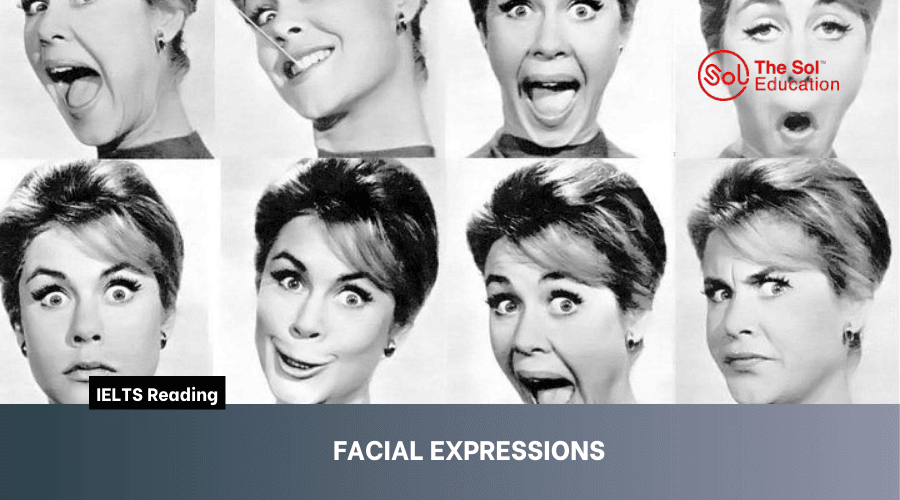
Facial expressions are a form of non-verbal communication, which make up a large part of our daily communication. By facial movements, we can suggest volumes of information without ‘speaking any words’. They are a primary means of conveying social information among humans but are also found in most other mammals and a few other animal species. Facial expressions and their significance in the perceiver can, to some extent, vary between cultures with evidence from descriptions in the works of Charles Darwin. Understanding facial impressions is of great importance, and also, some essential elements should be taken into account when people interpret the impressions.
B
Facial expressions are closely tied to emotions. Expressions are configurations of different small muscle movements in the face that show an individual’s discrete emotional states and a vast amount of cognitive information. A number of studies have proved that facial expressions are viewed as one of the best measures of emotional response. Sometimes words do not necessarily coincide with emotions, but the face might betray a person’s actual feelings. At the same time, the close link between emotions and expressions can also work in the other direction; it has been observed that voluntarily assuming an expression can actually cause the associated emotion.
C
Some expressions like anger and extreme contentment can be accurately comprehended even between members of different species. Others, however, are hard to interpret even in familiar individuals. For instance, disgust and fear can be tough to distinguish. Because faces have only a limited range of movements, expressions rely upon fairly slight differences in the proportions and relative positions of facial features, and reading them requires considerable sensitivity to some. Meanwhile, one’s life experiences, beliefs and conceptual knowledge will have an influence on how he deciphers the facial expressions.
D
Also, a person’s eyes reveal much about how they are feeling or what they are thinking. Research by Boston College professor Joe Tecce suggests that stress levels are reflected by blink rates. He supports his findings with statistics on the relation between the blink rates of presidential candidates and their success in their races. Tecce claims that the faster blinker in the presidential debates has lost every election since 1980, which seems interesting. However, it is important to recognise that non-verbal communication is multichannelled, and focusing on only one aspect is biased. Nervousness can also be measured by examining each candidate’s perspiration, eye contact and stiffness.
E
As Charles Darwin, the first person who pointed out that the facial expressions of particular emotions were universal, noted in his book The Expression of the Emotions in Man and Animals: ‘The young and the old of widely different races, both with man and animals, express the same state of mind by the same muscle movement.’ Still, up to the mid-20th century, most anthropologists believed that facial expressions were entirely learned and could therefore differ among cultures. Studies conducted in the 1960s by Paul Ekman eventually supported Darwin’s belief to a large degree.
F
Ekman’s opinion, which was contrary to that of some anthropologists including Margaret Mead, showed that facial expressions of emotions are not culturally determined but universal across human cultures. During the period between 1967 and 1968, Dr. Ekman travelled to Papua New Guinea to investigate the non-verbal communication behaviours of the South Fore people. If the South Fore tribe, a remote and primitive one, could interpret the facial expressions as their western counterparts, we would gain significant evidence of the universality of facial expressions. Subjects, including 189 adults and 130 children from a very isolated population, as well as 23 members who lived in a less-isolated lifestyle, were shown three pictures (two for children) of facial expressions and then asked to match those pictures to three different scenarios that described particular emotions.
G
It was discovered that the isolated South Fore people could identify emotions with the same accuracy as the less-isolated control group, but the study displayed some problems including the fact that both fear and surprise are constantly misidentified. He also drew a conclusion that certain facial expressions correspond to particular emotions and cannot be covered, no matter what the cultural background is, and regardless of whether or not the culture has been isolated or exposed to the mainstream.
H
Expressions Ekman found to be generally recognised included those indicating anger, disgust, fear, joy, sadness and surprise (note that none of these emotions has a definitive social component, such as shame, pride or schadenfreude). Findings on contempt (which is social), an expression which can occur with or without a hint of small muscle motions, are less clear, though there is at least some preliminary evidence that this emotion and its expression are universal. This may suggest that the facial expressions are largely related to the mind, with each part of the face expressing a particular emotion.
Reading Passage 2 has eight paragraphs, A–H.
Which paragraph contains the following information?
Write the correct letter, A–H, in boxes 14–19 on your answer sheet.
NB You may use any letter more than once.
14 mention of the data correlation between blink frequency and election results
15 early records of how culture influences the interpretation of facial expressions
16 the difficulty in identifying the actual meaning of facial expressions
17 reference to the sociality of several facial expressions
18 various indicators of how nervous a person is
19 mention of the relation between emotions and facial expressions
Complete the summary below.
Choose NO MORE THAN TWO WORDS from the passage for each answer. Write your answers in boxes 20–24 on your answer sheet.
Ekman’s findings demonstrated that fear and surprise are persistently 20________ , and Ekman concluded that some facial expressions coincide with certain 21________ and are impossible to be masked, regardless of 22 ________, or whether the culture is 23 ________or 24 ________the mainstream.
Choose TWO letters, A–E.
Write the correct letters in boxes 25 and 26 on your answer sheet.
25-26 Which TWO of the following statements are true according to Ekman’s theory?
A There is no evidence that animals have their own facial expressions
B Facial expressions are associated with different cultures
C There is an underlying relationship between facial expressions and mental states
D Men's facial expressions are more controlled by psychology than women's.
E Facial expressions that express certain emotions are the same even across cultures
14 D
15 A
16 C
17 H
18 D
19 B
20 misidentified
21 emotions
22 cultural background
23 isolated
24 exposed
25-26 CE
Biểu cảm khuôn mặt là một hình thức giao tiếp phi ngôn ngữ, chiếm một phần lớn trong giao tiếp hàng ngày của chúng ta. Thông qua cử động khuôn mặt, chúng ta có thể truyền tải khối lượng thông tin mà không cần "nói một lời nào". Chúng là phương tiện chính để truyền đạt thông tin xã hội giữa những người nhưng cũng được tìm thấy ở hầu hết các loài động vật có vú khác và một số loài động vật khác. Biểu cảm khuôn mặt và ý nghĩa của chúng đối với người quan sát, ở một mức độ nào đó, có thể khác nhau giữa các nền văn hóa với bằng chứng từ các mô tả trong tác phẩm của Charles Darwin. Hiểu được các biểu cảm trên khuôn mặt là điều rất quan trọng, và bên cạnh đó, một số yếu tố cần thiết cần được tính đến khi mọi người giải thích các biểu cảm này.
Biểu cảm khuôn mặt gắn liền chặt chẽ với cảm xúc. Biểu cảm là sự cấu hình của các chuyển động nhỏ khác nhau của các cơ trên mặt, thể hiện trạng thái cảm xúc riêng biệt của một cá nhân và một lượng thông tin nhận thức khổng lồ. Một số nghiên cứu đã chứng minh rằng biểu cảm khuôn mặt được coi là một trong những thước đo tốt nhất về phản ứng cảm xúc. Đôi khi lời nói không nhất thiết trùng khớp với cảm xúc, nhưng khuôn mặt có thể tiết lộ cảm xúc thực sự của một người. Đồng thời, mối liên hệ chặt chẽ giữa cảm xúc và biểu cảm cũng có thể hoạt động theo hướng ngược lại; người ta đã quan sát thấy rằng việc tự nguyện thể hiện một biểu cảm thực sự có thể gây ra cảm xúc liên quan.
Một số biểu cảm như tức giận và mãn nguyện tột độ có thể được hiểu chính xác ngay cả giữa các thành viên của các loài khác nhau. Tuy nhiên, một số biểu cảm khác lại khó diễn giải ngay cả ở những người quen thuộc. Ví dụ, ghê tởm và sợ hãi có thể khó phân biệt. Bởi vì khuôn mặt chỉ có một phạm vi chuyển động hạn chế, biểu cảm dựa vào những điểm khác biệt khá nhỏ về tỷ lệ và vị trí tương đối của các đặc điểm trên khuôn mặt, và việc đọc chúng đòi hỏi sự nhạy bén đáng kể đối với một số người. Trong khi đó, trải nghiệm cuộc sống, niềm tin và kiến thức khái niệm của một người sẽ ảnh hưởng đến cách họ giải mã các biểu cảm trên khuôn mặt.
Ngoài ra, đôi mắt của một người còn tiết lộ rất nhiều về cảm giác hoặc suy nghĩ của họ. Nghiên cứu của giáo sư Joe Tecce thuộc Đại học Boston cho thấy mức độ căng thẳng được phản ánh qua tốc độ chớp mắt. Ông ấy hỗ trợ những phát hiện của mình bằng số liệu thống kê về mối quan hệ giữa tốc độ chớp mắt của các ứng cử viên tổng thống và thành công của họ trong các cuộc đua. Tecce tuyên bố rằng người chớp mắt nhanh hơn trong các cuộc tranh luận tổng thống đã thua mọi cuộc bầu cử kể từ năm 1980, điều này có vẻ thú vị. Tuy nhiên, điều quan trọng là phải nhận ra rằng giao tiếp phi ngôn ngữ là đa kênh, và chỉ tập trung vào một khía cạnh là sai lệch. Sự lo lắng cũng có thể được đo bằng cách kiểm tra mồ hôi, giao tiếp bằng mắt và sự cứng nhắc của từng ứng cử viên.
Charles Darwin, người đầu tiên chỉ ra rằng biểu cảm khuôn mặt của những cảm xúc cụ thể mang tính phổ quát, đã lưu ý trong cuốn sách Biểu cảm của cảm xúc ở người và động vật: "Người trẻ và người già thuộc các chủng tộc khác nhau, cả ở người và động vật, đều thể hiện cùng một trạng thái tinh thần bằng cùng một chuyển động cơ bắp." Tuy nhiên, cho đến giữa thế kỷ 20, hầu hết các nhà nhân học đều tin rằng biểu cảm khuôn mặt hoàn toàn được học hỏi và do đó có thể khác nhau giữa các nền văn hóa. Các nghiên cứu do Paul Ekman tiến hành vào những năm 1960 cuối cùng đã phần lớn ủng hộ niềm tin của Darwin.
Ý kiến của Ekman, trái ngược với ý kiến của một số nhà nhân học bao gồm Margaret Mead, cho thấy biểu cảm khuôn mặt của cảm xúc không bị chi phối bởi văn hóa mà mang tính phổ biến trên khắp các nền văn hóa của con người. Trong khoảng thời gian từ năm 1967 đến năm 1968, Tiến sĩ Ekman đã đi đến Papua New Guinea để nghiên cứu hành vi giao tiếp phi ngôn ngữ của người dân Nam Fore. Nếu bộ tộc Nam Fore, một bộ tộc xa xôi và nguyên thủy, có thể hiểu các biểu cảm trên khuôn mặt giống như những người phương Tây thì chúng ta sẽ có được bằng chứng quan trọng về tính phổ biến của biểu cảm trên khuôn mặt. Những người tham gia, bao gồm 189 người lớn và 130 trẻ em từ một nhóm dân cư rất biệt lập, cũng như 23 thành viên sống trong lối sống ít biệt lập hơn, được xem ba bức tranh (hai bức dành cho trẻ em) về biểu cảm trên khuôn mặt và sau đó được yêu cầu so sánh những bức tranh đó với ba kịch bản khác nhau mô tả những cảm xúc cụ thể.
Người ta phát hiện ra rằng người dân Nam Fore biệt lập có thể xác định cảm xúc với độ chính xác tương tự như nhóm đối chứng ít biệt lập hơn, nhưng nghiên cứu cho thấy một số vấn đề bao gồm cả việc sợ hãi và ngạc nhiên luôn bị xác định nhầm lẫn. Ông cũng đưa ra kết luận rằng một số biểu cảm trên khuôn mặt tương ứng với những cảm xúc cụ thể và không thể che giấu được, bất kể nền tảng văn hóa là gì, và bất kể văn hóa đó có bị cô lập hay tiếp xúc với xu hướng chính thống hay không.
Các biểu cảm mà Ekman phát hiện được nhận dạng chung bao gồm: tức giận, ghê tởm, sợ hãi, vui mừng, buồn bã và ngạc nhiên (Lưu ý rằng không có cảm xúc nào trong số này có thành phần xã hội dứt khoát, chẳng hạn như xấu hổ, tự hào hoặc thích thú bất hạnh của người khác). Những phát hiện về khinh thường (mang tính xã hội), một biểu cảm có thể xuất hiện với hoặc không có một dấu hiệu chuyển động của cơ nhỏ, thì ít rõ ràng hơn, mặc dù có ít nhất một số bằng chứng sơ bộ cho thấy cảm xúc này và biểu hiện của nó mang tính phổ biến. Điều này có thể cho thấy rằng biểu cảm trên khuôn mặt phần lớn liên quan đến tâm trí, với mỗi phần của khuôn mặt thể hiện một cảm xúc cụ thể.