It is more important to spend public money on promoting a healthy lifestyle in order to prevent illness than to spend it on treatment of people who are already ill. To what extent do you agree or disagree?
| Themes: - healthcare system - social responsibility - diseases - health-conscious |
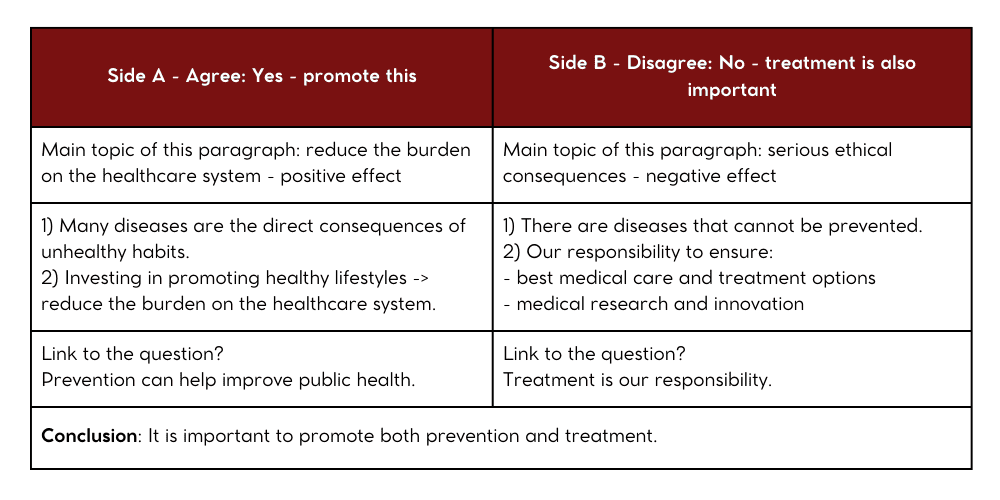
In today's modern world, the allocation of public funds is a subject of significant debate. A persistent question in public health funding is whether it is more important to invest in promoting healthy lifestyles to prevent illness or to allocate resources for treating those already sick. I partially agree with the statement, recognizing the value of both aspects of public healthcare.
To begin with, promoting a healthy lifestyle through public funds is undeniably essential. This is primarily because many diseases that plague society today are direct consequences of unhealthy lifestyles. The rise in non-communicable diseases such as heart disease, diabetes, and obesity can be largely attributed to poor dietary choices, a lack of physical activity, and other unhealthy habits. By investing in education, awareness campaigns, and infrastructure for healthier living, we can reduce the incidence of these diseases and, consequently, the burden on the healthcare system.
Nevertheless, there are certain diseases that cannot be completely prevented through lifestyle modifications. Infectious diseases, for instance, can affect even the most health-conscious individuals. Neglecting this aspect would be unfair to individuals who suffer from such illnesses. It is our ethical responsibility to provide them with access to the best possible medical care and treatment options. By doing so, we not only ensure that individuals receive the care they deserve but also advance medical research and innovation, potentially leading to more effective treatments in the future.
In conclusion, while it is undoubtedly crucial to invest in initiatives that encourage healthier living, it is equally important to allocate resources for disease treatment. Striking a balance between prevention and treatment is the key to a comprehensive and effective public healthcare system, ensuring both a healthier future and the best possible care for those who are already afflicted with illness.
(293 words)
- plague: hoành hành
- non-communicable diseases: bệnh không lây nhiễm
- be largely attributed to: phần lớn là do
- poor dietary choices: lựa chọn chế độ ăn uống kém/nghèo nàn
- burden: gánh nặng
- lifestyle modifications: thay đổi lối sống
- health-conscious: ý thức về sức khỏe
- ethical responsibility: trách nhiệm đạo đức
- afflicted with illness: bị bệnh