The implications of climate change on global biodiversity
Paragraph A:
The inexorable progression of climate change is instigating profound alterations across global ecosystems. As atmospheric temperatures ascend and precipitation patterns become increasingly erratic, the delicate balance of biodiversity is disrupted. Species are compelled to shift their geographic ranges, undertake arduous migrations, or face the grim prospect of extinction. These ecological upheavals have far-reaching implications, not only for the natural world but also for human societies reliant on ecosystem services for essentials such as potable water, food security, and climate regulation.
Paragraph B:
In the frigid polar regions, the relentless ascent of temperatures is precipitating unprecedented rates of ice melt. This phenomenon jeopardizes emblematic species such as polar bears and penguins, whose survival is intrinsically linked to ice-covered habitats. Moreover, the disintegration of ice sheets in Greenland and Antarctica is contributing to the inexorable rise in sea levels, posing an existential threat to coastal communities and island nations worldwide.
Paragraph C:
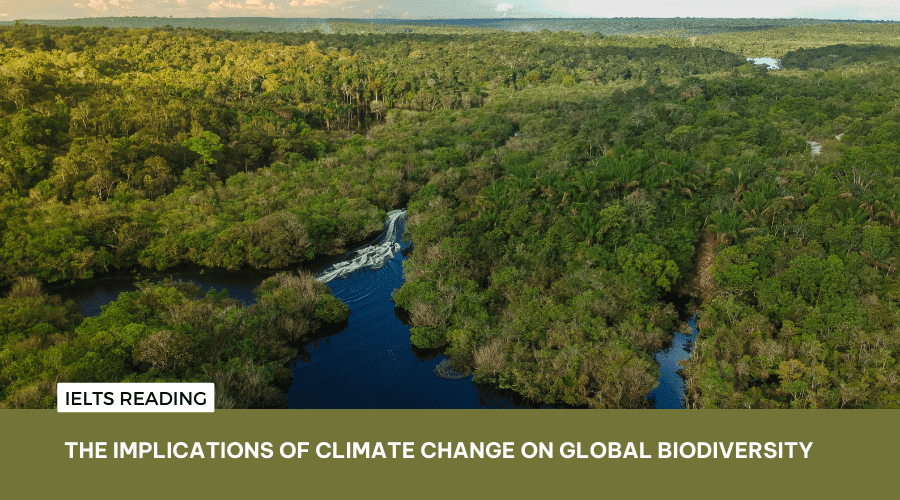
Tropical regions, renowned for their exuberant biodiversity, are not immune to the ravages of climate change. Elevated temperatures and altered precipitation regimes are exacting a heavy toll on tropical rainforests, home to an astonishing array of flora and fauna. Human activities, particularly deforestation driven by agricultural expansion, exacerbate these impacts, leading to habitat fragmentation, loss of species, and heightened carbon emissions.
Paragraph D:
Coral reefs, often dubbed the "rainforests of the sea," are acutely sensitive to temperature variations. Even modest increases in water temperatures can trigger coral bleaching events, wherein corals expel the symbiotic algae that provide them with nutrients. This phenomenon not only devastates the corals but also imperils the myriad marine species that depend on these intricate structures for habitat and sustenance.
Paragraph E:
Agricultural systems, pivotal for human sustenance, are particularly vulnerable to the vicissitudes of climate change. Fluctuations in temperature and precipitation adversely affect crop yields and disrupt traditional growing seasons, thereby imperiling food security. Farmers are compelled to adopt adaptive strategies, often entailing significant financial outlays and technological innovations.
Paragraph F:
The health ramifications of climate change are manifold and profound. Altered weather patterns facilitate the proliferation of vector-borne diseases, while extreme weather events exacerbate respiratory and cardiovascular conditions. Vulnerable populations, particularly in developing nations, bear the brunt of these health impacts, underscoring the imperative for equitable healthcare interventions.
Paragraph G:
Mitigating the deleterious effects of climate change necessitates a concerted global effort. The transition to renewable energy sources, enhancement of energy efficiency, and implementation of sustainable land-use practices are imperative. International cooperation and stringent policy measures are indispensable to curtail greenhouse gas emissions and safeguard global ecosystems for future generations.
Questions 1 - 4
Do the following statements agree with the claims of the writer in Reading Passage?
In boxes 1 - 4 on your answer sheet, write
YES if the statement agrees with the claims of the writer
NO if the statement contradicts the claims of the writer
NOT GIVEN if it is impossible to say what the writer thinks about this
1. Climate change is causing species to relocate to new geographical areas.
2. The melting of polar ice only affects species living in those regions.
3. Deforestation has no significant impact on climate change.
4. Coral reefs are not affected by minor increases in water temperature
2. Questions 5 - 9
Choose the correct letter, A, B, C or D.
Write the correct letter in boxes 5-9 on your answer sheet.
5. What is a direct consequence of rising temperatures in polar regions?
A. Increase in global rainfall
B. Disintegration of ice sheets
C. Expansion of desert areas
D. Decrease in sea levels
6. Which human activity exacerbates the impact of climate change on tropical rainforests?
A. Coral bleaching
B. Melting ice caps
C. Deforestation
D. Crop failures
7. Which group is most affected by the health impacts of climate change?
A. Urban populations
B. Wealthy nations
C. Vulnerable populations in developing nations
D. Middle-aged adults
8. What is necessary for mitigating the effects of climate change?
A. Continuing current energy practices
B. Enhancing energy efficiency
C. Reducing international cooperation
D. Limiting technological advancements
9. Coral reefs are often referred to as what?
A. The deserts of the sea
B. The forests of the sea
C. The rainforests of the sea
D. The mountains of the sea
3. Questions 10 - 13
The Reading Passage has eight sections, A-G.
Which section contains the following information?
Write the correct number, A-G, in boxes 10-13 on your answer sheet.
10. Species migrating due to climate change.
11. Impact of climate change on human health.
12. Deforestation exacerbating climate change.
13. Coral bleaching due to temperature changes.
1. Climate change is causing species to relocate to new geographical areas.
- Answer: YES
- Explanation: In Paragraph A, the text states, "Species are compelled to shift their geographic ranges." This directly supports the statement that climate change is causing species to move to new areas.
2. The melting of polar ice only affects species living in those regions.
- Answer: NO
- Explanation: Paragraph B explains that the melting ice sheets in Greenland and Antarctica contribute to the rise in sea levels, which poses a threat to coastal communities and island nations worldwide, indicating the broader impact beyond just polar species.
3. Deforestation has no significant impact on climate change.
- Answer: NO
- Explanation: Paragraph C discusses that deforestation driven by agricultural expansion exacerbates the impacts of climate change, leading to habitat fragmentation, loss of species, and heightened carbon emissions. This shows that deforestation does have a significant impact on climate change.
4. Coral reefs are not affected by minor increases in water temperature.
- Answer: NO
- Explanation: In Paragraph D, it states, "Even modest increases in water temperatures can trigger coral bleaching events," indicating that even small temperature changes significantly affect coral reefs.
5. What is a direct consequence of rising temperatures in polar regions?
- Answer: B. Disintegration of ice sheets
- Explanation: Paragraph B mentions that the rising temperatures in polar regions lead to "unprecedented rates of ice melt" and "disintegration of ice sheets," making option B the correct answer.
6. Which human activity exacerbates the impact of climate change on tropical rainforests?
- Answer: C. Deforestation
- Explanation: Paragraph C states, "Human activities, particularly deforestation driven by agricultural expansion, exacerbate these impacts," which directly links deforestation to worsening climate change effects on tropical rainforests.
7. Which group is most affected by the health impacts of climate change?
- Answer: C. Vulnerable populations in developing nations
- Explanation: Paragraph F highlights that "vulnerable populations, particularly in developing nations, bear the brunt of these health impacts," indicating that these groups are most affected by the health consequences of climate change.
8. What is necessary for mitigating the effects of climate change?
- Answer: B. Enhancing energy efficiency
- Explanation: Paragraph G lists several necessary actions for mitigating climate change, including the "enhancement of energy efficiency," making option B correct.
9. Coral reefs are often referred to as what?
- Answer: C. The rainforests of the sea
- Explanation: Paragraph D refers to coral reefs as the "rainforests of the sea," thus making option C correct.
10. Species migrating due to climate change.
- Answer: A
- Explanation: Paragraph A discusses how species are shifting their geographic ranges due to climate change.
11. Impact of climate change on human health.
- Answer: F
- Explanation: Paragraph F explains the various health impacts of climate change, including the proliferation of vector-borne diseases and exacerbation of respiratory and cardiovascular conditions.
12. Deforestation exacerbating climate change.
- Answer: C
- Explanation: Paragraph C describes how deforestation driven by agricultural expansion exacerbates the impacts of climate change.
13. Coral bleaching due to temperature changes.
- Answer: D
- Explanation: Paragraph D discusses how modest increases in water temperatures can trigger coral bleaching events.