Đọc thêm:
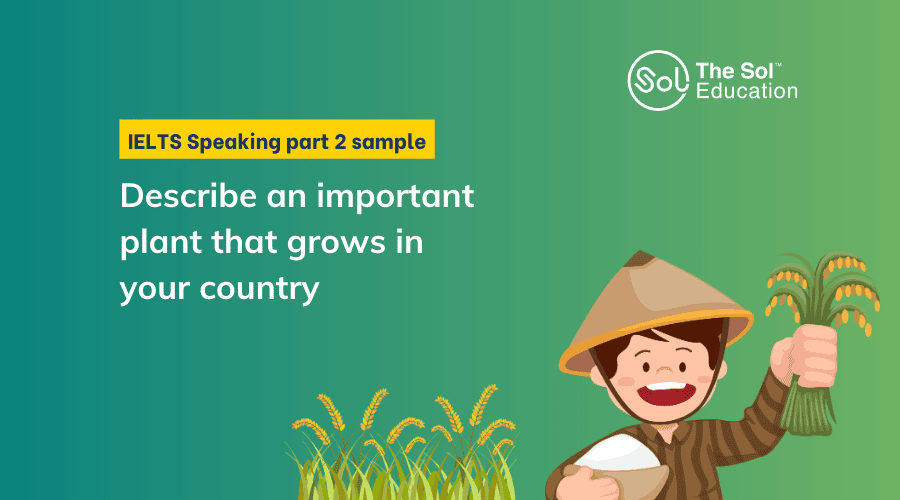
Describe an important plant that grows in your country
You should say:
I would like to talk about rice, which is a very important plant in my country, Vietnam.
Rice is the staple food for most people in Vietnam, and it plays a crucial role in our culture and economy. You can see rice fields, or paddies, in many rural areas across the country, especially in the Red River Delta in the north and the Mekong Delta in the south. These regions are known for their vast, green expanses of rice paddies that stretch as far as the eye can see.
A rice plant has long, slender leaves that are bright green in color. As it grows, it produces stalks that can reach about 1 to 1.5 meters in height. When the rice grains mature, they form in clusters at the top of the stalks and turn a golden brown color, indicating they are ready for harvest.
Rice is important to Vietnam for several reasons. Firstly, it is a major part of our diet. Most Vietnamese meals include rice, and it is also used to make a variety of traditional dishes like pho, banh mi, and spring rolls. Secondly, rice cultivation is a significant source of livelihood for many Vietnamese farmers. It supports the rural economy and provides employment for millions of people.
Furthermore, rice has cultural significance in Vietnam. It is often associated with prosperity and abundance, and it plays a central role in many festivals and ceremonies. For example, during the Lunar New Year, or Tet, rice cakes called "banh chung" are made to celebrate the occasion.
In conclusion, rice is not just an important plant in terms of nutrition, but it also holds economic and cultural value for the people of Vietnam.
Từ vựng hữu ích:
One significant plant in my country is the bamboo plant. It is ubiquitous across various regions, particularly thriving in the southern and eastern parts of the country, where the climate is more humid and temperate, ideal for its growth.
Bamboo is highly recognizable due to its tall, slender appearance and distinctive green color. The stalks are usually hollow inside, with segments marked by nodes at regular intervals. Its leaves are long and narrow, tapering to a point. This plant can grow incredibly fast, sometimes several inches in a single day, making it one of the fastest-growing plants in the world.
The importance of bamboo in our culture and economy cannot be overstated. Culturally, bamboo symbolizes flexibility and resilience, mirroring the values of endurance and adaptability in our society. This symbolism is often celebrated in our art and literature, where bamboo is depicted as an example of integrity and moral rectitude.
Economically, bamboo is a versatile resource used in a myriad of ways. It serves as a critical material in the construction industry, particularly in rural areas, where it is used for building everything from simple fences to complete houses. Additionally, bamboo is employed in making furniture, musical instruments, and even utensils. Its young shoots are edible and considered a delicacy in many local cuisines, adding to its economic value.
Furthermore, bamboo plays a vital role in environmental protection. It helps in controlling soil erosion and quickly regenerates after harvesting, making it a sustainable alternative to tree wood. Given these multifaceted benefits, bamboo is undoubtedly an essential plant in my country, deeply embedded in both our ecological landscape and cultural heritage.
Từ vựng IELTS hữu ích:

1. What are the features of living in the countryside?
Living in the countryside offers a slower pace of life compared to urban areas. It's usually quieter and closer to nature, which many people find relaxing and peaceful. The air quality is often better, and there's more space for outdoor activities like gardening or hiking. Additionally, communities in the countryside tend to be tighter-knit, fostering a strong sense of belonging and community spirit among residents.
2. Should schools teach children how to grow plants?
Yes, I believe schools should teach children how to grow plants. It's a valuable skill that promotes environmental awareness and responsibility from a young age. Learning to grow plants teaches children about the natural world, the importance of sustainable practices, and can also encourage healthier eating habits if they grow their own vegetables. It's a practical skill that can be enjoyable and educational for students.
3. Why do some people prefer to live in the countryside?
There are several reasons why some people prefer to live in the countryside. Firstly, as I mentioned earlier, the countryside offers a quieter and more peaceful environment away from the hustle and bustle of cities. Secondly, there's often more space and larger properties available in rural areas, which can be appealing for families or individuals looking for a quieter lifestyle. Additionally, the countryside tends to have lower pollution levels and a closer connection to nature, which can contribute to better overall well-being for residents.
4. Have new kinds of plants been grown in your city recently?
Absolutely, there's been a delightful surge in the cultivation of novel plant species across our urban landscape. As sustainability and urban gardening gain momentum, enthusiasts and communities alike are embracing the cultivation of exotic and indigenous flora. This not only enriches our surroundings aesthetically but also fosters biodiversity, offering urbanites new avenues to connect with nature amidst the concrete jungle.
5. Why do some people like to keep plants at home?
Keeping plants at home holds a myriad of appeals for individuals. Firstly, beyond their ornamental charm, plants serve as natural purifiers, enhancing indoor air quality and creating a healthier living environment. Secondly, nurturing plants can be a therapeutic endeavor, known to alleviate stress and promote relaxation. Moreover, the act of tending to plants provides a sense of accomplishment as they flourish under one's care, adding a touch of serenity and vitality to any living space.
6. Are there many trees in your city?
While our city boasts a decent number of trees, particularly in parks, residential areas, and along prominent thoroughfares, the presence of greenery remains a pivotal aspect of urban planning. Trees not only lend shade and respite from the urban heat island effect but also play a crucial role in mitigating air pollution and supporting local biodiversity. Enhancing our urban canopy with more trees not only beautifies our cityscape but also promotes a healthier and more sustainable urban environment for all residents to enjoy.
Từ vựng IELTS hữu ích:
Hy vọng những câu trả lời mẫu từ The SOL IELTS có thể giúp các bạn mở rộng thêm ý tưởng, cách diễn đạt và từ vựng, chuẩn bị tốt hơn trong phần thi IELTS Speaking sắp tới.
Nếu bạn đang loay hoay trong việc tự học IELTS, không biết bắt đầu từ đâu hoặc học mãi mà không hiệu quả, hãy tham khảo chương trình đào tạo IELTS chất lượng cao của The SOL Education. SOL có lớp học offline và lớp học online dành cho học viên toàn quốc với sĩ số lớp siêu nhỏ - học phí cực kì phải chăng và cam kết đầu ra. Với các thầy cô giỏi, tận tâm và đội ngũ chăm sóc sát sao, SOL đã giúp rất nhiều học viên đạt band điểm mục tiêu từ 6.5 - 8.0 IELTS.
Chúc các bạn học IELTS thật tốt nhé!