Modern lifestyles and societal changes là nhóm chủ đề với rất nhiều khía cạnh khác nhau mà chúng ta hay gặp trong IELTS. Để có thể giải quyết tốt các yêu cầu của đề thi, bạn cần có lượng từ vựng cần thiết. Trong bài viết này, The SOL Education sẽ giúp các bạn xây dựng bản đồ tư duy các nhóm từ vựng trong chủ đề Modern lifestyles and societal changes.
Bản đồ tư duy từ vựng IELTS cách trình bày trực quan về một chủ đề bao gồm các từ và cụm từ liên quan đến chủ đề. Bằng cách sắp xếp các từ và cụm từ theo giản đồ sẽ giúp chúng ta ghi nhớ từ vựng dễ dàng hơn thay vì liệt kê và học chúng theo danh mục.
Sắp xếp ngôn từ và ý tưởng theo cách dễ nhớ và sử dụng phương pháp này trong ngày thi sẽ giúp bạn có kết quả tốt hơn. Không những hỗ trợ bạn chuẩn bị tốt cho kỳ thi IELTS mà phương pháp này còn giúp bạn hiểu và giao tiếp tốt hơn qua việc sở hữu nguồn từ vựng tiếng Anh dồi dào.
Với chủ đề Modern lifestyles and societal changes, chúng ta có thể sắp xếp thành một số nhóm khía cạnh nhỏ như sau:
Thay đổi xã hội (Societal Changes)
Lối sống hiện đại (Modern Lifestyles)
Thách thức và Cơ hội (Challenges and Opportunities)
Tất nhiên, bạn hoàn toàn có thể sắp xếp bản đồ tư duy từ vựng với các yếu tố khác nhau, dựa trên tư duy cũng như hệ thống học tập của bản thân. Đây chỉ là một gợi ý mà The SOL muốn chia sẻ với bạn thôi nè.
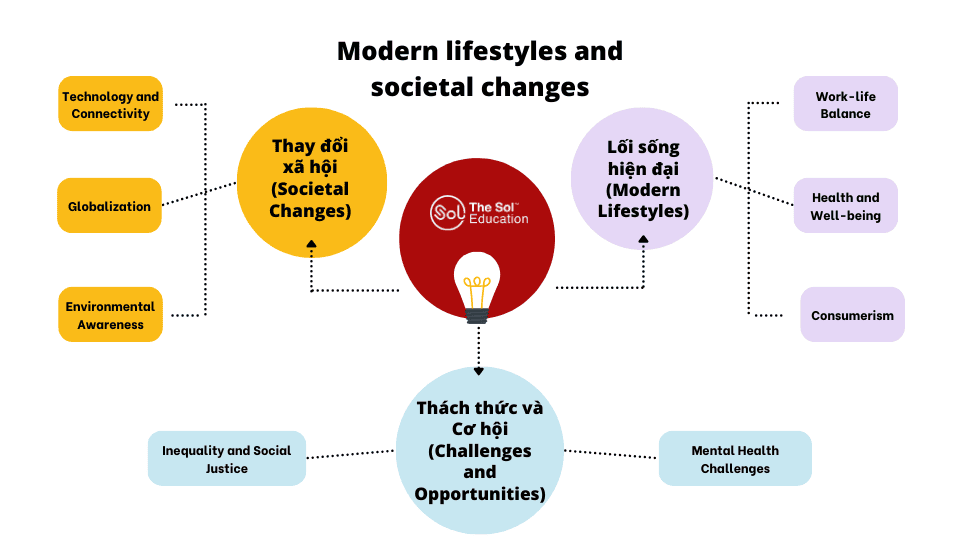
Bây giờ, chúng ta sẽ cùng liệt kê một số từ vựng thuộc chủ đề Modern lifestyles and societal changes dựa trên các nhóm khía cạnh vừa được đưa ra ở trên nhé:
| STT | Từ vựng | Phiên âm | Nghĩa tiếng Anh | Nghĩa tiếng Việt |
|---|---|---|---|---|
| 1 | Smartphones | /ˈsmɑːrtfoʊnz/ | Mobile phones with advanced features and capabilities. | Điện thoại thông minh |
| 2 | Social media | /ˈsoʊʃəl ˈmidiə/ | Online platforms for people to connect and share information. | Mạng xã hội |
| 3 | Information technology | /ˌɪnfərˈmeɪʃən tɛkˈnɒlədʒi/ | The use of computers and software to manage and process information. | Công nghệ thông tin |
| 4 | Internet access | /ˈɪntərnɛt ˈæksɛs/ | The ability to connect to the internet. | Truy cập internet |
| 5 | Digitalization | /ˌdɪdʒɪtəlaɪˈzeɪʃən/ | The conversion of data into a digital format. | Số hóa dữ liệu |
| 6 | Cybersecurity | /ˈsaɪbərˌsɪkjʊrəti/ | Measures to protect computer systems and networks from cyberattacks. | An ninh mạng |
| 7 | Online presence | /ˈɒnlaɪn ˈprɛzəns/ | The visibility an individual or organization has on the internet. | Hiện diện trực tuyến |
| 8 | Virtual reality (VR) | /ˈvɜːrʧuəl riˈæləti/ | A simulated experience that can be similar to or completely different from the real world. | Thực tế ảo |
| 9 | Augmented reality (AR) | /ɔːɡˈmɛntɪd riˈæləti/ | An enhanced version of reality created using technology to overlay digital information on an image of something being viewed through a device. | Thực tế tăng cường |
| 10 | E-commerce | /ˈiːˌkɒmɜːrs/ | Commercial transactions conducted electronically on the internet. | Thương mại điện tử |
| 11 | Streaming services | /striːmɪŋ ˈsɜːrvɪsɪz/ | Online platforms that deliver audio or video content to users in real-time. | Dịch vụ truyền straming |
| 12 | Digital communication | /ˈdɪdʒɪtl kəˌmjunɪˈkeɪʃən/ | Communication using digital channels, like email, messaging apps, or video calls. | Giao tiếp số hóa |
| 13 | Cyberbullying | /ˈsaɪbərˌbʊliɪŋ/ | The use of electronic communication to bully a person, typically by sending intimidating or threatening messages. | Bắt nạt trực tuyến |
| 14 | Data privacy | /ˈdeɪtə ˈpraɪvəsi/ | The protection of personal information from being accessed or disclosed without consent. | Bảo vệ quyền riêng tư dữ liệu |
| 15 | Innovation | /ˌɪnəˈveɪʒən/ | The introduction of new ideas, products, or methods. | Đổi mới |
| STT | Từ vựng | Phiên âm | Nghĩa tiếng Anh | Nghĩa tiếng Việt |
|---|---|---|---|---|
| 16 | Global market | /ˈɡloʊbəl ˈmɑːrkɪt/ | The interconnected marketplace where goods and services are exchanged at a global level. | Thị trường toàn cầu |
| 17 | International communication | /ˌɪntərˈnæʃənəl kəˌmjunɪˈkeɪʃən/ | Communication between people or entities in different countries. | Giao tiếp quốc tế |
| 18 | Multiculturalism | /ˌmʌltiˈkʌltʃərəlɪzəm/ | The coexistence of diverse cultural groups within a society. | Đa văn hóa |
| 19 | Cultural exchange | /ˈkʌltʃərəl ɪksˈʧeɪndʒ/ | The sharing of cultural perspectives, practices, and ideas between different societies or communities. | Trao đổi văn hóa |
| 20 | Diversity | /daɪˈvɜːrsəti/ | The inclusion of a wide variety of people from different backgrounds, cultures, and demographics within a group or organization. | Đa dạng |
| 21 | Interconnectedness | /ˌɪntərkəˈnɛktɪdnɪs/ | The state of being connected with one another, often globally. | Sự kết nối |
| 22 | Global economy | /ˈɡloʊbəl ɪˈkɑːnəmi/ | The economic systems and activities that span multiple countries and regions. | Nền kinh tế toàn cầu |
| 23 | Cross-cultural understanding | /krɔːsˈkʌltʃərəl ˌʌndərˈstændɪŋ/ | Comprehension and appreciation of different cultural backgrounds and perspectives. | Hiểu biết văn hóa đa quốc gia |
| 24 | Global citizenship | /ˈɡloʊbəl ˈsɪtɪzənʃɪp/ | A sense of belonging and responsibility to the global community, transcending national boundaries. | Công dân toàn cầu |
| 25 | Migration | /maɪˈɡreɪʃən/ | The movement of people from one place to another, often across countries or regions. | Di cư |
| 26 | Transnational corporations | /trænzˈnæʃənəl kɔːrˈpɔːrəʃənz/ | Large companies that operate and have a significant presence in multiple countries. | Tập đoàn đa quốc gia |
| 27 | Intercontinental trade | /ˌɪntərkɒntɪˈnɛntəl treɪd/ | Trade activities and transactions that occur between continents. | Thương mại liên châu |
| 28 | Global workforce | /ˈɡloʊbəl ˈwɝːkfɔrs/ | The collective labor force across the world. | Lực lượng lao động toàn cầu |
| 29 | Cultural integration | /ˈkʌltʃərəl ˌɪntəˈɡreɪʃən/ | The blending and harmonization of cultural traits, practices, and beliefs from different societies. | Tích hợp văn hóa |
| 30 | Global challenges | /ˈɡloʊbəl ˈʧæləndʒɪz/ | Major issues or problems affecting the world as a whole. | Thách thức toàn cầu |
| STT | Từ vựng | Phiên âm | Nghĩa tiếng Anh | Nghĩa tiếng Việt |
|---|---|---|---|---|
| 31 | Climate change | /ˈklaɪmət ʧeɪndʒ/ | Significant and lasting changes in the Earth's climate patterns, often resulting from human activities. | Biến đổi khí hậu |
| 32 | Recycling | /rɪˈsaɪklɪŋ/ | The process of converting waste materials into reusable objects. | Tái chế |
| 33 | Environmental conservation | /ɪnˌvaɪrənˈmɛntl ˌkɒnsərˈveɪʃən/ | The preservation and protection of the natural environment and its resources. | Bảo vệ môi trường |
| 34 | Sustainable development | /səˈsteɪnəbl dɪˈvɛləpmənt/ | Economic growth that meets the needs of the present without compromising the ability of future generations to meet their own needs. | Phát triển bền vững |
| 35 | Renewable energy | /rɪˈnuːəbl ˈɛnərdʒi/ | Energy from sources that are naturally replenished, such as sunlight, wind, and rain. | Năng lượng tái tạo |
| 36 | Carbon footprint | /ˈkɑːrbən ˈfʊtprɪnt/ | The total amount of greenhouse gases emitted into the atmosphere by an individual, organization, event, or product. | Lượng khí thải carbon |
| 37 | Greenhouse gases | /ˈɡriːnhaʊs ˈɡæsɪz/ | Gases that trap heat in the atmosphere, contributing to the greenhouse effect and global warming. | Khí nhà kính |
| 38 | Ecological balance | /ˌiːkəˈlɑːdʒɪkəl ˈbæləns/ | The state of equilibrium in an ecosystem where the interactions between organisms and their environment maintain stability. | Cân bằng sinh thái |
| 39 | Deforestation | /ˌdiːˌfɒrɪˈsteɪʃən/ | The action of clearing a wide area of trees in a forest, often to repurpose the land for other uses. | Tàn phá rừng |
| 40 | Ocean acidification | /ˈoʊʃən ˌæsədɪfɪˈkeɪʃən/ | The decrease in the pH of the Earth's oceans, primarily caused by increased carbon dioxide levels, leading to harmful effects on marine life. | Axít hóa đại dương |
| 41 | Biodiversity loss | /ˌbaɪoʊdəˈvɜːrsəti lɒs/ | The decline or reduction in the variety of life in a particular habitat or ecosystem. | Mất đa dạng sinh học |
| 42 | Pollution control | /pəˈluːʃən kənˈtroʊl/ | Measures and strategies to prevent or mitigate the contamination and degradation of the environment caused by pollutants. | Kiểm soát ô nhiễm |
| 43 | Sustainable lifestyle | /ˈsʌstənəbl ˈlaɪfˌstaɪl/ | A way of living that reduces the use of Earth's natural resources and minimizes environmental impact. | Lối sống bền vững |
| 44 | Eco-friendly products | /ˈikoʊˈfrɛndli ˈprɑːdʌkts/ | Products that are not harmful to the environment and are made with sustainable materials and processes. | Sản phẩm thân thiện với môi trường |
| 45 | Wildlife conservation | /ˈwaɪldlaɪf ˌkɒnsərˈveɪʃən/ | The protection and preservation of animals and plants in their natural habitats. | Bảo tồn động, thực vật hoang dã |
| STT | Từ vựng | Phiên âm | Nghĩa tiếng Anh | Nghĩa tiếng Việt |
|---|---|---|---|---|
| 46 | Remote work | /rɪˈmoʊt wɜrk/ | Working from a location outside the office, often from home or a remote workspace. | Làm việc từ xa |
| 47 | Flexible schedules | /ˈflɛksəbl ˈskɛdʒəlz/ | Adaptable work hours that allow for better balance between work and personal life. | Lịch trình linh hoạt |
| 48 | Rest and relaxation | /rɛst ənd ˌrɛlækˈseɪʃən/ | Taking time off to unwind and de-stress, essential for overall well-being. | Nghỉ ngơi |
| 49 | Burnout | /ˈbɜrnˌaʊt/ | A state of chronic physical and emotional exhaustion, often caused by excessive work-related stress. | Kiệt sức, mệt mỏi vì công việc |
| 50 | Time management | /taɪm ˈmænɪdʒmənt/ | Planning and organizing time effectively to enhance productivity and achieve a work-life balance. | Quản lý thời gian |
| 51 | Job satisfaction | /ʤɑb ˌsætɪsˈfækʃən/ | The contentment and fulfillment derived from one's work and working conditions. | Sự hài lòng trong công việc |
| 52 | Flextime | /flɛksˈtaɪm/ | A system that allows employees to choose their work hours within certain limits. | Làm việc linh hoạt về thời gian |
| 53 | Telecommuting | /ˈtɛlɪkəˌmjutɪŋ/ | Working from a location away from the office, communicating with the workplace electronically. | Làm việc tại xa, thường thông qua công nghệ điện tử |
| 54 | Wellness programs | /ˈwɛlnəs ˈproʊˌɡræmz/ | Initiatives provided by employers to promote healthy habits and well-being among employees. | Chương trình chăm sóc sức khỏe và sự tồn tại cho nhân viên |
| 55 | Sabbatical | /səˈbætɪkəl/ | An extended period of leave, often taken to rest, travel, or study. | Nghỉ phép kéo dài, thường để nghỉ ngơi, du lịch hoặc học tập |
| STT | Từ vựng | Phiên âm | Nghĩa tiếng Anh | Nghĩa tiếng Việt |
|---|---|---|---|---|
| 56 | Healthy eating | /ˈhɛlθi ˈitɪŋ/ | Consuming a diet rich in nutrients and beneficial for one's health. | Ăn uống lành mạnh |
| 57 | Exercise and sports | /ˈɛksərsaɪz ənd spɔrts/ | Physical activities and games that promote fitness and well-being. | Thể dục và thể thao |
| 58 | Yoga and meditation | /ˈjoʊɡə ənd ˌmɛdɪˈteɪʃən/ | Practices that enhance mental and physical well-being through relaxation and mindfulness. | Yoga và thiền |
| 59 | Mental health | /ˈmɛntəl hɛlθ/ | The state of well-being concerning one's psychological and emotional faculties. | Sức khỏe tinh thần |
| 60 | Stress management | /strɛs ˈmænɪdʒmənt/ | Techniques to cope with and reduce stress for improved overall health. | Quản lý và giảm căng thẳng để cải thiện sức khỏe tổng thể |
| 61 | Adequate sleep | /ˈædɪkwət sliːp/ | Getting sufficient and quality rest during the night, essential for well-being. | Giấc ngủ đủ |
| 62 | Wellness routine | /ˈwɛlnəs ruˈtiːn/ | A set of regular activities or practices aimed at maintaining and enhancing health and well-being. | Lịch trình sức khỏe |
| 63 | Physical fitness | /ˈfɪzɪkəl ˈfɪtnɪs/ | The overall condition of the body in terms of strength, endurance, and flexibility. | Sức khỏe thể chất |
| 64 | Holistic health | /hoʊˈlɪstɪk hɛlθ/ | An approach to health that considers the whole person, including physical, mental, and social aspects. | Sức khỏe toàn diện |
| 65 | Nutritional balance | /njuˈtrɪʃənəl ˈbæləns/ | A diet that provides all the essential nutrients needed for good health. | Cân bằng dinh dưỡng |
| STT | Từ vựng | Phiên âm | Nghĩa tiếng Anh | Nghĩa tiếng Việt |
|---|---|---|---|---|
| 66 | Sustainable consumption | /səˈsteɪnəbl kənˈsʌmpʃən/ | The use of goods and services that have minimal environmental impact and are ethically produced. | Tiêu dùng bền vững |
| 67 | Social consumption | /ˈsoʊʃəl kənˈsʌmpʃən/ | Consumption patterns influenced by social and cultural factors. | Tiêu dùng xã hội |
| 68 | Collective consumption | /kəˈlɛktɪv kənˈsʌmpʃən/ | Consumption that involves a group or community, often for shared or communal goods and services. | Tiêu dùng tập thể |
| 69 | Materialism | /məˈtɪriəˌlɪzəm/ | The prioritization of material possessions and wealth in one's life. | Chủ nghĩa vật chất |
| 70 | Consumer behavior | /kənˈsʌmər bɪˈheɪvjər/ | The study of how individuals and groups select, purchase, and use products and services. | Hành vi tiêu dùng |
| 71 | Brand loyalty | /brænd ˈlɔɪəlti/ | The tendency of consumers to repeatedly choose products from a particular brand. | Sự trung thành với thương hiệu |
| 72 | Advertising influence | /ˈædvərˌtaɪzɪŋ ˈɪnfluəns/ | The effect of marketing and advertisements on consumer choices and preferences. | Ảnh hưởng của quảng cáo đối với lựa chọn của người tiêu dùng |
| 73 | Disposable income | /dɪˈspoʊzəbl ˈɪnkəm/ | The income available after paying taxes and necessities, used for spending and saving. | Thu nhập khả dụng |
| 74 | Consumer rights | /kənˈsʌmər raɪts/ | The rights and protections granted to consumers regarding fair treatment in the marketplace. | Quyền của người tiêu dùng |
| 75 | Impulse buying | /ˈɪmpʌls baɪɪŋ/ | Purchasing items on a whim without careful consideration. | Mua hàng bừa bãi, không suy nghĩ kỹ lưỡng |
| STT | Từ vựng | Phiên âm | Nghĩa tiếng Anh | Nghĩa tiếng Việt |
|---|---|---|---|---|
| 76 | Stress | /strɛs/ | A state of mental or emotional strain or tension resulting from adverse circumstances. | Căng thẳng |
| 77 | Depression | /dɪˈprɛʃən/ | Feelings of severe despondency and dejection. | Trầm cảm |
| 78 | Anxiety | /æŋˈzaɪəti/ | A feeling of worry, nervousness, or unease about something with an uncertain outcome. | Lo lắng, căng thẳng |
| 79 | Burnout | /ˈbɜrnˌaʊt/ | A state of chronic physical and emotional exhaustion, often caused by excessive work-related stress. | Trạng thái kiệt sức |
| 80 | Mental wellbeing | /ˈmɛntl wɛlˈbiːɪŋ/ | The state of feeling content and balanced mentally, emotionally, and socially. | Sức khỏe tâm lý |
| 81 | Therapy | /ˈθɛrəpi/ | Treatment intended to relieve or heal a disorder, especially a psychological one. | Sự điều trị |
| 82 | Self-care | /sɛlf kɛr/ | The practice of taking an active role in protecting one's own well-being and happiness, in particular during periods of stress. | Tự chăm sóc bản thân |
| 83 | Mindfulness | /ˈmaɪndfəlnɪs/ | A mental state achieved by focusing one's awareness on the present moment. | Tĩnh lặng tâm hồn |
| 84 | Coping mechanisms | /ˈkoʊpɪŋ ˈmɛkəˌnɪzəmz/ | Strategies or techniques used to deal with stress or difficult situations. | Các cơ chế để ứng phó với stress và tình huống khó khăn |
| 85 | Psychological resilience | /ˌsaɪkəˈlɑdʒɪkəl rɪˈzɪliəns/ | The ability to bounce back from adversity and adapt to challenges. | Khả năng phục hồi tâm lý, đối phó với khó khăn |
| STT | Từ vựng | Phiên âm | Nghĩa tiếng Anh | Nghĩa tiếng Việt |
|---|---|---|---|---|
| 86 | Gender inequality | /ˈʤɛndər ˌɪnɪˈkwɑləti/ | Unequal treatment or perceptions based on a person's gender. | Bất bình đẳng giới |
| 87 | Social justice | /ˈsoʊʃəl ˈʤəstɪs/ | The fair and just relation between individuals and society, particularly in the distribution of wealth, opportunities, and privileges. | Công bằng xã hội |
| 88 | Equal opportunities | /ˈikwəl ˌɒpərˈtjuːnətiz/ | The principle of giving all individuals the same chances for success and advancement, regardless of their background or circumstances. | Cơ hội bình đẳng |
| 89 | Discrimination | /dɪˌskrɪməˈneɪʃən/ | The unjust or prejudicial treatment of different categories of people, especially on the grounds of race, age, or sex. | Sự phân biệt đối xử |
| 90 | Diversity | /daɪˈvɜrsəti/ | The inclusion of individuals representing more than one national origin, color, religion, socioeconomic stratum, sexual orientation, etc. | Sự đa dạng |
| 91 | Inclusion | /ɪnˈkluʒən/ | The action or state of including or being included within a group or structure. | Sự bao gồm, sự đưa vào nhóm |
| 92 | Marginalization | /ˌmɑːrdʒɪnəlaɪˈzeɪʃən/ | The process of pushing a particular group or groups of people to the edge of society, preventing them from having equal opportunities and rights. | Bị gạt ra ngoài lề |
| 93 | Advocacy | /ˈædvəkəsi/ | Public support for or recommendation of a particular cause or policy. | Sự ủng hộ, sự bênh vực |
| 94 | Socioeconomic status (SES) | /ˌsoʊsi.oʊˈɛk.əˈnɑmɪk ˈsteɪtəs/ | An individual's or family's economic and social position relative to others based on income, education, and occupation. | Địa vị xã hội và kinh tế (SES) |
| 95 | Inequity | /ɪnˈɛkwəti/ | Lack of fairness or justice; an unfair situation in which some groups in society have more advantages and opportunities than others. | Bất bình đẳng, sự không công bằng |
Hy vọng những từ vựng này sẽ giúp ích cho bạn trong quá trình luyện thi IELTS. Bạn cũng có thể tự tạo cho mình những bản đồ tư duy từ vựng IELTS về các chủ đề khác nhau để tối ưu được ý tưởng và khả năng học tập của bản thân nhé.
Đọc thêm: