Đọc thêm:
Describe a historical building you have been to
You should say:
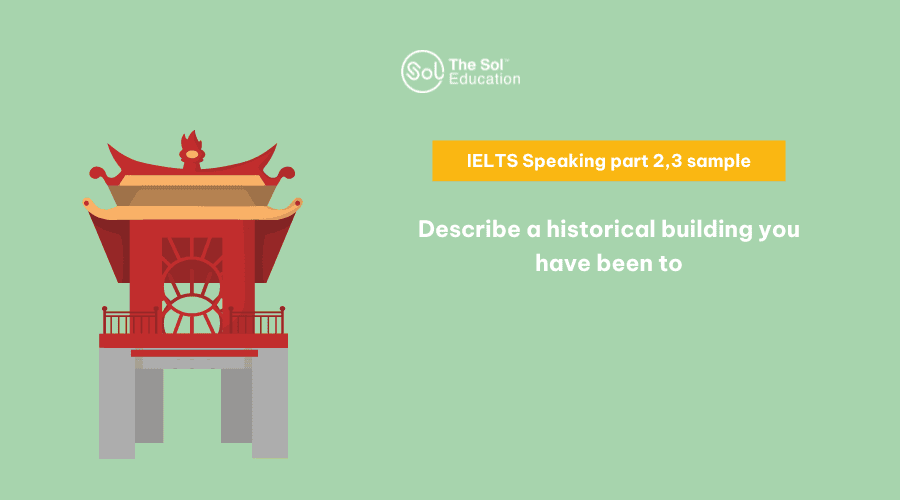
One historical building that I had the chance to visit is the Temple of Literature, or "Văn Miếu" in Vietnamese. It’s located in the center of Hanoi, the capital of Vietnam, and it’s one of the country’s oldest and most iconic landmarks.
The Temple of Literature has a traditional Vietnamese architectural style with red-tiled roofs, stone pathways, and ancient wooden pillars. It is surrounded by lush gardens and peaceful courtyards, which make it a very serene place. There are also many stone steles, each of them engraved with the names of students who passed royal exams hundreds of years ago. The complex consists of several different sections, including altars dedicated to Confucius and old study halls that were used by scholars.
These days, the Temple of Literature is primarily a tourist attraction, but it also serves as a symbol of Vietnam’s rich educational and cultural history. Many people, especially students, visit the site to pray for good luck in their studies or during exam season.
When I visited the temple, I learned a lot about Vietnam’s ancient education system, and how Confucianism played a major role in shaping the country’s values. I also felt a deep sense of pride and admiration for the scholars of the past, who dedicated their lives to learning and passing the challenging exams.
Overall, the experience was both educational and inspiring. I felt very connected to the history of my country, and it made me appreciate the value of education even more.
Dưới đây là một số từ vựng IELTS hữu ích được sử dụng trong sample trên, giúp các bạn tham khảo nè:

Well, I think there are quite a few differences between modern houses and those in the past. First of all, houses today are often designed with convenience and technology in mind. For example, you can find smart homes with automated lighting, heating, and security systems, which weren’t available before. Also, modern houses tend to be smaller, especially in urban areas, because of limited space and higher property prices. In contrast, houses in the past, especially in Vietnam, were larger and often built to accommodate extended families. I’d say that the materials have changed too—nowadays, concrete and steel are more common, whereas older houses were made of wood or brick.
In my opinion, there are several key factors people think about when buying a house or apartment. The first one is location, which is crucial because it affects daily life, like commuting to work, access to schools, or proximity to family. Price is, of course, another important factor, as buying a house is often the biggest financial commitment a person can make. People also consider the size and layout of the house, depending on the size of their family or future plans. Lastly, I think safety and the surrounding neighborhood are things people look at because they want to feel comfortable and secure in their new home.
Yes, I believe it’s very important to protect historical buildings. They are part of our cultural heritage and remind us of our history and identity. Once these buildings are gone, we lose a part of our past that can’t be replaced. Historical buildings often reflect unique architectural styles or important events from a particular era, so preserving them helps future generations understand and appreciate where they come from. I think it’s not just about the buildings themselves but also about maintaining the stories and values they represent.
I think opinions can be mixed on this issue. Some people might fully support the government using funds to protect historical buildings because they see it as an investment in preserving culture and history. However, others may feel that the money could be better spent on more pressing issues like healthcare, education, or infrastructure. In Vietnam, I think people generally understand the value of protecting heritage, but at the same time, they might question whether it should be prioritized over other social needs. So, it really depends on the individual’s perspective and the current economic situation.
From what I’ve observed, many Vietnamese people enjoy visiting historical buildings, especially during holidays or cultural festivals. These places often have deep connections to Vietnamese traditions and history, so visiting them gives people a sense of pride and understanding of their roots. For example, places like the Imperial City in Hue or the ancient town of Hoi An attract a lot of domestic tourists. However, I think younger generations might not be as interested unless these places are well-preserved and offer interactive experiences. But overall, historical buildings remain a popular destination for many Vietnamese people.
I think there are several reasons why people visit historical buildings. For one, many people are interested in learning about history and culture, and visiting these sites is a way to connect with the past. Historical buildings often tell stories about a country’s traditions, architecture, or important events, which can be fascinating for both locals and tourists. Additionally, these buildings are often very beautiful or unique, so people might visit just to admire their architecture or take photos. For others, visiting these sites can be a way to reflect on their own heritage or to feel a sense of connection to their ancestors.
Yes, I really think it’s necessary to protect historical buildings. They hold a lot of cultural and historical value, not just for one generation but for the whole society. Without them, we might lose a physical connection to our past. For example, in Vietnam, places like the Thang Long Citadel or the Temple of Literature are symbols of our national identity and history. Preserving these buildings helps educate future generations and keeps our traditions alive. Plus, I believe they add a lot of character and uniqueness to cities.
Well, I think it’s a bit divided. Some people absolutely agree that the government should fund the preservation of historical buildings because they see it as a way of maintaining national pride and attracting tourism. On the other hand, there are people who believe that the money should be allocated to more immediate concerns like healthcare or education. In Vietnam, I think the general sentiment leans towards supporting the preservation, but at the same time, many would prefer the government to balance funding between cultural preservation and public services.
Yes, I’d say a lot of Vietnamese people enjoy visiting historical buildings, especially during holidays or special events. These sites are often connected to important parts of our history, so it’s a way for people to feel connected to their roots. For instance, places like the Ho Chi Minh Mausoleum or My Son Sanctuary attract a lot of local visitors. However, I’ve noticed that younger people might not be as interested unless the site offers some interactive or modern elements to engage them more.
I think people visit historical buildings for a variety of reasons. Some visit because they’re curious about history and want to learn more about the past, while others might go because it’s part of their culture and identity. In Vietnam, for example, many people visit temples or old pagodas to pay respects or even seek blessings for good luck. There are also tourists who simply want to appreciate the architecture and beauty of these old structures. Personally, I think visiting these places is a way to step back from the modern world and reflect on how far we’ve come as a society.
The SOL Education tin rằng bài mẫu cho topic "Describe a historical building you have been to" đã giúp bạn hiểu rõ hơn về cách tiếp cận chủ đề này trong phần thi IELTS Speaking. Thông qua các câu trả lời mẫu, hy vọng bạn đã được trang bị từ vựng và cách diễn đạt thông tin một cách hiệu quả, giúp bạn thể hiện một phần thi nói đầy ấn tượng và sâu sắc.
Nếu bạn đang tìm kiếm một trung tâm học IELTS uy tín và chất lượng, The SOL Education là một sự lựa chọn tuyệt vời. Với hơn 10 năm kinh nghiệm trong lĩnh vực giảng dạy tiếng Anh, trung tâm đã tạo được uy tín trong lòng người học, với rất nhiều học viên đã đạt band điểm cao từ 6.5 - 8.0 IELTS.
The SOL Education tự hào là một môi trường học tập chuyên nghiệp và thân thiện, với đội ngũ giáo viên có trình độ cao và giàu kinh nghiệm. Những giảng viên tại trung tâm không chỉ sở hữu kiến thức chuyên môn vững vàng mà còn có khả năng tạo động lực và sự hứng thú trong quá trình học tập của học viên.
Chúc các bạn luyện thi IELTS Speaking thật tốt và đạt aim của bản thân nhé.