Bài viết dưới đây sẽ gợi ý bài mẫu cho chủ đề “Describe a toy you liked in your childhood” cùng những câu hỏi thường gặp và cách trả lời đơn giản nhất cho topic này. Hơn nữa, bài viết cũng sẽ giới thiệu về các từ vựng và cách diễn đạt giúp tăng điểm bài thi nói của thí sinh.
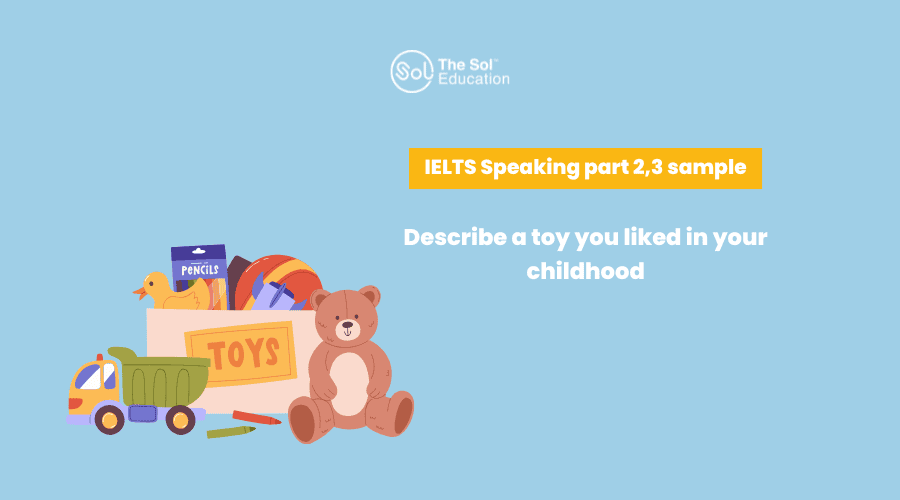
Describe a toy you liked in your childhood
You should say:
As a child, I had a deep affection for a particular toy that was pivotal in my early years. Let me kick off by talking about my beloved action figure, which was a replica of a popular superhero.
I received this action figure on my sixth birthday, a day filled with excitement and joy. My parents surprised me with it, and I remember the pure happiness that radiated through me when I unwrapped the gift. It was more than just a toy; it represented a character I admired greatly.
Now let me give you more details about how I played with it. I would often create elaborate adventures, imagining myself as the superhero alongside my action figure. My friends and I would engage in role-playing, transforming our living room into a battleground against imaginary villains. This toy sparked my creativity, allowing me to construct entire storylines, and it encouraged teamwork when my friends joined in on the fun.
Lastly, I have to explain how I felt about this action figure. It held a special place in my heart, not only because of the fun it provided but also due to the memories associated with it. Whenever I played with it, I felt a sense of empowerment and joy, as if I could conquer any challenge just like my superhero. Even now, reflecting on those times brings a smile to my face, reminding me of the innocence and boundless imagination of childhood.
Vocabulary:
As a child growing up in Vietnam, I had a special fondness for a traditional toy known as the top, or con quay in Vietnamese. This simple yet fascinating toy captivated my imagination and provided endless hours of entertainment.
I received this top from my grandmother during the Tet holiday when I was around five years old. It was a beautifully crafted wooden top, painted in vibrant colors, and it came with a long string that was used to spin it. My grandmother often told me stories about how children in her generation would play with similar tops, which made it even more meaningful to me.
Now let me tell you how I played with it. I would find an open space, often in the courtyard or at the local park, where I could set the top spinning. The challenge was to get it to spin for as long as possible, and I would compete with my friends to see whose top would last longer. We would also invent games around it, such as trying to knock each other's tops down or creating a tournament to see who could spin their top the fastest. The laughter and excitement shared with my friends while playing these games created unforgettable memories.
Reflecting on that time, I feel a deep sense of nostalgia and warmth. Playing with the top brought a sense of community and connection, as we all gathered to enjoy this traditional toy. It instilled in me a love for Vietnamese culture and traditions, and even now, whenever I see a top, it reminds me of the joy of my childhood and the special bond I shared with my grandmother.
Vocabulary:
Advertisements can have a significant impact on children in various ways. As far as I can see, children are particularly impressionable, and ads often shape their preferences and desires. For instance, they might see a commercial featuring a flashy toy and feel a strong urge to have it, believing that owning it will bring them happiness. What I reckon is that this can lead to a materialistic mindset from a young age. On top of that, constant exposure to advertisements can create unrealistic expectations about products, making children believe they need the latest gadgets or toys to fit in.
Vocabulary:
This is a complex issue. On one hand, I believe that advertising aimed at kids should be more regulated rather than outright prohibited. Children are not equipped to critically analyze advertisements, so it’s essential to ensure that the content is appropriate and not misleading. That said, I can understand the argument for prohibiting such advertising altogether, as it can promote unhealthy consumer habits and contribute to issues like obesity. To my way of thinking, a balanced approach is necessary, focusing on educational advertising that encourages positive values and healthy lifestyles.
Vocabulary:
As far as I can see, parents should prioritize spending more time with their kids over buying them more toys. To kick off, toys can be enjoyable, but they often do not replace the value of quality time spent together. Engaging in activities like playing games or reading can foster a deeper bond and create lasting memories. That said, it’s also important for children to have toys that stimulate creativity and development. What’s more, playing together can enhance a child's social skills and emotional intelligence. Therefore, I’d go as far as to say that finding a balance between buying toys and dedicating time is crucial for a child's overall growth.
Vocabulary:
There’s quite a contrast between toys from the past and those popular today. For starters, many toys nowadays are technology-driven, incorporating features like screens, sounds, and interactive elements. For example, kids today might play with electronic devices or smart toys that connect to apps. In contrast, toys in the past were often simpler, focusing more on imaginative play, such as dolls, action figures, or building blocks. That said, I believe both types of toys have their merits. While modern toys can enhance learning through technology, traditional toys promote creativity and social interaction. To share one example, classic board games encouraged family bonding and face-to-face interaction, which is sometimes lost in today’s digital age.
Vocabulary:
Như vậy trong bài viết này, SOL IELTS đã mang đến cho bạn một số câu trả lời hiệu quả cho phần thi IELTS Speaking part 2 với đề bài Describe a toy you liked in your childhood, cũng như giải quyết các câu hỏi liên quan trong phần IELTS Speaking part 3. Hy vọng thông qua đó, các bạn sẽ có thêm một số ý tưởng và từ vựng IELTS hay cho bài viết của mình.
SOL là đơn vị Đào tạo IELTS sĩ số nhỏ Chất lượng cao, cam kết đầu ra, với các lớp học trực tiếp hoặc online, với hệ phương pháp S-O-L độc quyền, mang đến cho người học môi trường học tập tốt nhất. Nếu các bạn đang tìm cho mình một địa chỉ học IELTS uy tín thì đừng ngại liên hệ SOL nhé.
Chúc các bạn luôn giữ được động lực trong quá trình luyện thi IELTS và đạt kết quả cao trong kì thi IELTS sắp tới.
Đọc thêm: