Describe a time when you received money as a gift là dạng đề bài thường xuất hiện trong kỳ thi IELTS. Để có thể làm tốt chủ đề này, thí sinh cần nắm chắc từ vựng và cấu trúc về chủ đề Describe a experience (Miêu tả trải nghiệm). Hôm nay, SOL IELTS sẽ cung cấp cho bạn bài mẫu IELTS Speaking Part 2, IELTS Speaking Part 3: Describe a time when you received money as a gift.
Đọc thêm:
.png)
Describe a time when you received money as a gift (birthday, wedding)
You should say:
Dưới đây là ý tưởng trả lời của SOL dành cho đề bài trên:
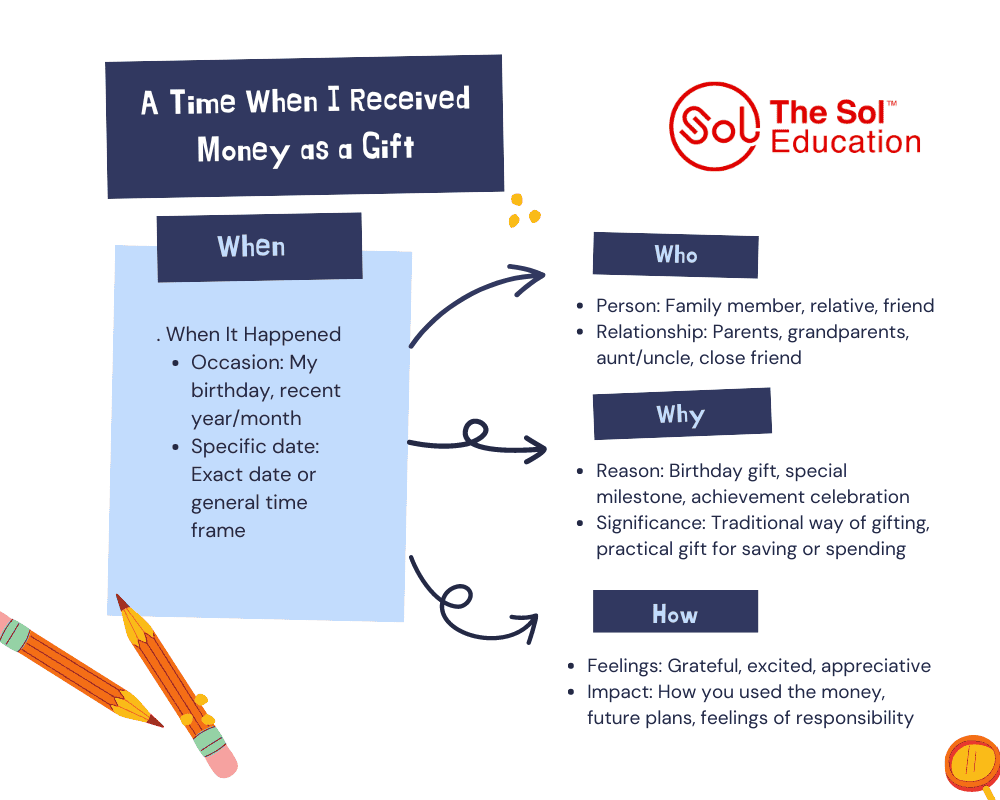
I want to talk about a time when I received money as a gift. It was my birthday last year, and it turned out to be a memorable occasion for me.
On my birthday, my grandparents gave me some money as a gift. They have always been very generous and supportive, and this time was no different. They handed me an envelope with a significant amount of money inside.
They gave me money for a few reasons. Firstly, it was a way to celebrate my birthday and show their love and care for me. Secondly, they wanted me to have the freedom to use the money in a way that would benefit me the most, whether it be for my studies, personal expenses, or saving for something important in the future. In Vietnamese culture, giving money as a gift is quite common, especially for significant occasions like birthdays, weddings, and Lunar New Year. It is seen as a practical and thoughtful gesture.
When I received the money, I felt incredibly grateful and excited. It was not just about the money itself, but the thought and love behind it. I decided to use a portion of the money to buy some books and materials for my studies, and I saved the rest for future needs. Receiving this money made me feel a sense of responsibility as well, encouraging me to use it wisely. Well, it was a wonderful experience, and it made my birthday even more special. The gift of money from my grandparents was not only a practical gift but also a reminder of their love and support. It has had a positive impact on me, both in terms of providing financial help and motivating me to make thoughtful decisions about my spending and savings.
Từ vựng IELTS hữu ích:
I think people rarely use cash now because of the convenience of digital payment methods. With the rise of online shopping and mobile banking, it's become easier and faster to make transactions electronically. Additionally, carrying cash can be risky due to the potential for loss or theft. Therefore, many people prefer the security and efficiency of using credit cards, debit cards, or digital wallets for their purchases.
>> Cách trả lời các dạng câu hỏi IELTS Speaking part 3 từ A-Z
Children typically begin to comprehend the value of money at a young age, usually when they start receiving allowances or when they express interest in buying toys or treats. As they become more aware of their surroundings, they start to understand the concept of exchange and the importance of money in acquiring goods and services. However, the depth of their understanding may vary depending on factors such as their upbringing, exposure to financial discussions, and personal experiences.
I believe it can be beneficial for parents to reward children with money in certain situations, as it can help teach them the value of hard work and responsibility. However, it's essential to strike a balance and ensure that money is not the sole motivator for good behavior or achievements. Parents should also emphasize non-monetary rewards such as praise, encouragement, and quality time spent together to foster intrinsic motivation and a sense of fulfillment in children.
Yes, I think it's both good and necessary to teach children to save money from a young age. Learning to save instills important financial habits and skills that will benefit them throughout their lives. By teaching children the value of delayed gratification and the importance of setting aside money for future goals, parents can help them develop a sense of financial responsibility and independence. Moreover, saving money can provide a sense of security and preparedness for unexpected expenses or emergencies.
Chúc các bạn trả lời tốt đề thi Describe a time when you received money as a gift (birthday, wedding) trong phần thi IELTS Speaking part 2 nhé.